
Water basins are the future of sustainable farming; they ensure water security in drier periods
Anyone who can, enjoys the sunny summer of 2026. The downside of this beautiful summer is the growing drought; it was almost the driest July since records began in 1906. There has been barely any rain in the past three months, and even though some rain will fall, it will not be enough to end the drought. Dutch news headlines talk about drastic measurements, wildfires, threats to nature, horticulture and agriculture as groundwater levels drop.
For (fruit) farmers, the drought means a year full of uncertainty as fields and orchards dry out from the sun and wind. It causes stress to plants and stress for farmers. Now that the fruits and crops are in crucial growing phases, water is running low, leading to a risk of lower yields and higher costs. In some areas, salty water also increases the risk of damage to fruits and vegetables.
Not all farmers and gardeners are that nervous, though. They have a weapon in this battle: an excavated water basin.
Water basins
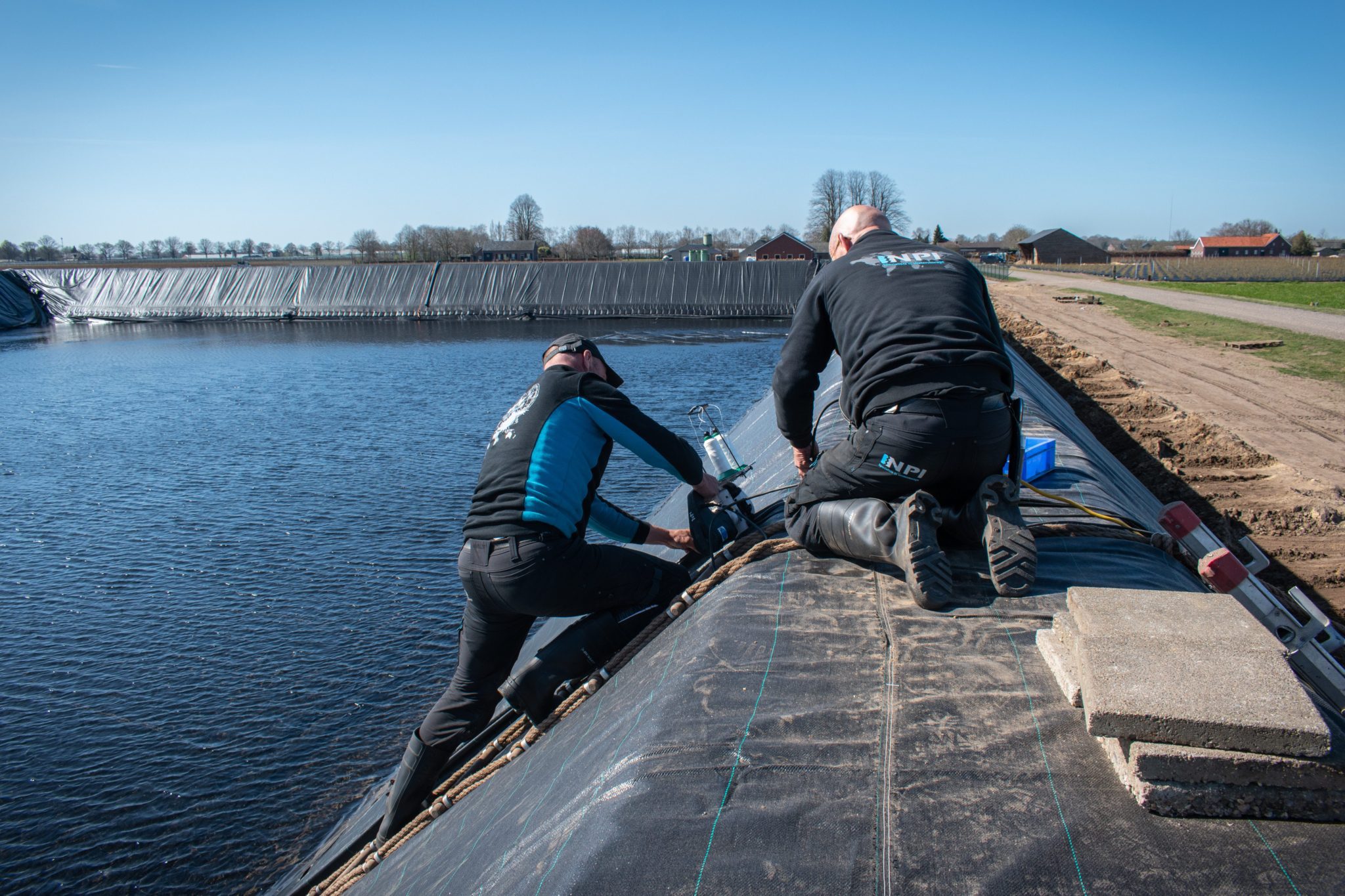
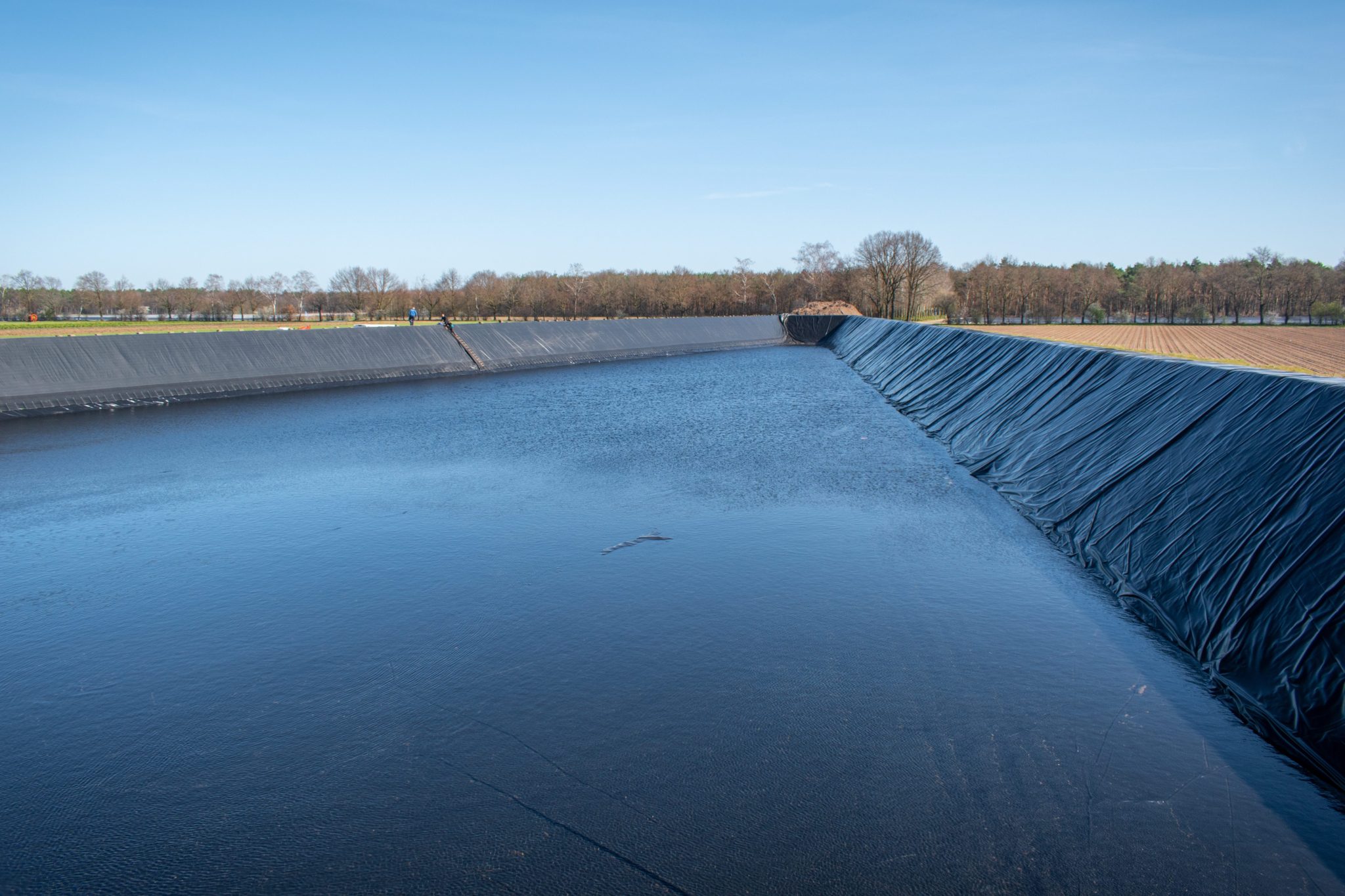
A water basin is an artificially created water reservoir, partially dug into the ground. The excavated soil is used to create embankments. NPI lines the basin with high-quality film, making it fully waterproof and helping maintain the water level.

Application
There is growing attention on water buffering, and rightly so. A water basin can be used to store water during wet periods and use it during dry periods. Water that is collected by the basin itself, or water from rooftops or paved surfaces can be stored in the basin. Over the past 65 years, NPI has lined hundreds of basins, many of them for drought protection. The water is used for irrigation in horticulture, fruit cultivation, agriculture, public green spaces, recreation or other purposes.
Water basin as a weapon in the fight against drought
For small businesses, using tap water can be an option, but for larger companies the capacity is often insufficient. During droughts, there is typically a peak in demand for tap water in general, and extra demand from horticulture and agriculture is not desired. In some areas, restrictions or bans on using surface water for irrigation are in place, limiting farmers’ options even further. Water basins are ideal for farmers who need to store large volumes of water. They reduce pressure on the local drinking water supply, keep businesses running and make farmers less dependent on the availability and quality of incoming water, offering them peace of mind during dry periods.

Basin liner
NPI lines basins with a film that best suits the local conditions. In many cases, this is our high-quality ENPEX FPP. Besides excellent resistance to UV and weathering, ENPEX FPP combines great mechanical properties with a wide range of chemical resistance. It is chemically inert, very flexible and has excellent dimensional stability across a wide temperature range. We produce basin linings up to 5,000 m² in our production facility. For larger basins, the film we supply the film in multiple panels and weld them together on-site. The film is installed over the entire embankment and buried at ground level.
Connections
Waterproof connections are installed on the pipings, made from the same type of film used to line the basin. The inlets and outlets are welded onto the basin film at the correct locations on-site.
Embankment protection
All the water basins we install are protected with heavy-duty geotextile featuring a tile edge. This protects the film above the waterline from weather, animals and weeds. The slope protection is buried at ground level, and tiles are placed in the seam to keep the geotextile in place. We produce the geotextile at our facility so that only the corners need to be sewed on-site.
NPI works closely with partners who handle permits, soil research, excavation of the basins and any necessary maintenance.
The advantages of a basin with film
- A basin can be installed in any shape and size as needed. This offers companies great flexibility, as they can install a basin on any available piece of land on their property. Irrigation specialists calculate the required capacity based on the number of hectares to be irrigated, the amount of water and the irrigation frequency. Any size basin is possible; water basins are especially suited for farmers needing to store large volumes of water, unlike smaller storage systems.
- The liners are fabricated and welded under perfect conditions. Most of the basin liners we can prefabricate in our factory.
- Compared to other types of water storage, an excavated water basin has a low investment cost per square meter.
- Quick installation on-site. The film can be rolled out and shaped easily to fit the basin.
- Because our lining materials are strong and durable, a basin can last for many years with minimal maintenance.




Salinisation
Water basins also serve as a weapon in the fight against salinisation, which occurs in many areas worldwide, especially in dry and coastal regions. In recent years, we have lined several basins in areas where salinisation is a problem and causes water shortages in agriculture. By collecting rainwater in a basin, farmers have a supply of clean, fresh water that they can use for irrigation. This also helps to keep the soil healthier and prevents further salinisation.
Plan ahead and reduce the impact of future drought periods
To effectively deal with drought, thinking ahead is essential. This means we should not just respond to the current situation but also plan proactively and take measures to reduce the impact of future drought periods.
With united effort, 15,000 m2 of ENPEX FPP is pulled into this basin in Zeeland


